
In many California schools, staffing pressure does not stay neatly within HR.
When a school is trying to hire a Speech-Language Pathologist, Occupational Therapist, BCBA, School Psychologist, School Nurse, Special Education Teacher, or another hard-to-fill professional, the strain often spreads quickly. HR teams spend more time sourcing candidates and coordinating interviews. Special education teams work around service gaps. School leaders try to protect continuity for students while also managing staff workloads, family communication, and day-to-day operations.
That is why many schools and districts choose to work with a specialist staffing agency that focuses on therapists and related services professionals.
The right partner does more than send resumes. A specialist agency can help reduce administrative burden, support continuity of student services, and give your internal team more breathing room during difficult searches. For California schools, that support matters most when it is reliable, student-centred, and grounded in the realities of school-based services.
A vacancy in a therapy or student support role creates far more than a hiring problem.
It can affect schedules, student support coordination, team capacity, and communication across the school or district. Even when staff are doing their best, open roles usually create extra work for people whose time is already stretched.
That extra burden may include:
For school and district leaders, the issue is not only how to fill a vacancy. It is how to keep the wider system steady while that vacancy remains open.
One of the clearest benefits of specialist support is simple: your internal team has less to carry alone.
Instead of asking HR to manage every stage of a difficult search from the ground up, a specialist staffing partner can take on a large share of the sourcing, screening, and early coordination work. That helps reduce the time your team spends searching for niche candidates and narrows the field to professionals who are better aligned with school-based roles.
This can help schools by:
For many schools, that administrative relief is just as valuable as the staffing support itself.
In California schools, staffing is not just about filling a vacancy. It is about supporting services that sit within a wider student support framework.
A specialist agency should understand that therapists and related services professionals often work alongside teachers, special education teams, school leaders, and families. They need to communicate well, work within school systems, and understand the importance of consistency and professionalism in student-facing roles.
That matters especially where services connect to student plans and coordinated support. A strong staffing partner should be able to speak clearly about the school setting these professionals are entering without overstating its role or making promises that feel unrealistic.
Schools need confidence that the people being presented are not only qualified on paper, but also suited to the school environment.
It is completely reasonable for school and district leaders to ask whether using a specialist agency is worth the cost.
The answer depends on context. Direct hiring may still be the preferred route in many cases. But schools also need to weigh the real cost of leaving a role open, restarting searches, stretching existing teams, and carrying the operational burden of a prolonged vacancy.
A specialist agency can be a practical option when:
The point is not that agency support is always cheaper. The point is that schools should measure value against the full operational reality, not just the headline rate.
For California schools, trust matters as much as speed.
Any outside partner should show respect for student privacy, district processes, professional standards, and the wider compliance environment around student services. That includes being organised, careful with information, realistic about process, and clear in communication.
A responsible specialist agency should understand the importance of:
This should not feel like a vague claim. A strong agency should make its process feel careful, dependable, and school-ready from the beginning.
A specialist staffing partner may support California schools and districts with a wide range of therapists and related services professionals, including:
Some schools need full-time placements. Others need part-time support, interim coverage, short-term help, or assistance with hard-to-fill vacancies. The best staffing partnerships are flexible enough to match the real needs of the school rather than force every role into the same model.
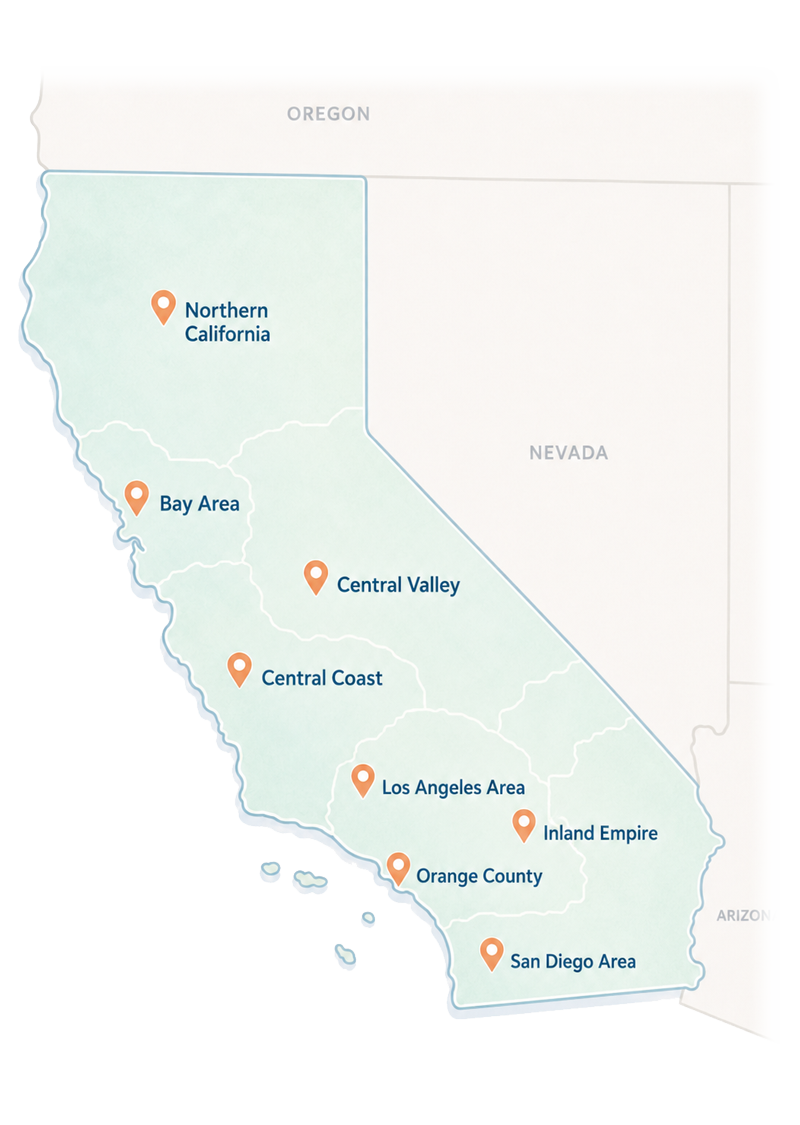
Nova Health Therapies serves schools and districts across all regions of California.
That means supporting school communities with staffing needs in urban, suburban, and rural settings across the state. Whether the need is for one hard-to-fill role, interim coverage, or broader staffing support, the goal is the same: to help schools access qualified therapists and related services professionals in a way that reduces internal burden and supports students.
A clear process helps schools feel confident that outside support will reduce work, not create more of it.
The school or district shares the role, timeline, setting, and type of support needed.
The agency confirms the details that affect fit, including student population, schedule, campus context, and district requirements.
The agency identifies qualified therapists and related services professionals whose background aligns with the role.
The school reviews suitable candidates without having to manage the full search from the ground up.
The agency supports a smoother start by helping coordinate the next steps required by the school or district.
The relationship continues with clear communication so issues can be addressed early and support remains steady.
A specialist agency helps schools find qualified therapists and related services professionals for school-based roles. Unlike a general recruiter, a specialist agency is more likely to understand school environments, student service needs, and the importance of matching candidates to the realities of educational settings.
Many schools still prefer direct hiring when possible. But when roles are hard to fill, timelines are tight, or internal teams are already stretched, a specialist agency can help reduce the burden. It can take on much of the sourcing, screening, and coordination work so your HR and student services teams are not carrying the full process alone.
Not always in practical terms. A direct hire may look less expensive at first, but schools also need to consider the cost of long vacancies, repeated recruitment cycles, staff strain, and disruption to student services. A specialist agency can be a cost-effective option when the alternative is a prolonged gap or repeated hiring delays.
A good agency takes on much of the search work that consumes internal time. That can include sourcing, early screening, outreach, and initial coordination. This means HR teams spend less time reviewing unsuitable applications and more time focusing on broader school or district priorities.
Yes. One of the main benefits of working with a school-focused partner is that it understands the setting in which these services sit. A specialist agency should understand that communication, coordination, continuity, and professionalism matter when therapists and related services professionals are supporting students within a wider educational framework.
Support may include Speech-Language Pathologists, SLPAs, Occupational Therapists, COTAs, BCBAs, RBTs, Paraprofessionals, School Psychologists, School Nurses, CNAs, Home Health Aides, Physical Therapists, Special Education Teachers, LMFTs, Social Workers, and LVNs.
The best agencies do more than match a credential to a vacancy. They should ask about your setting, schedule, student needs, team structure, and priorities so they can present candidates who are qualified and a better fit for the school environment.
Yes. Many schools use agency support for interim coverage, short-term needs, or fast support during a transition period. This can be especially useful when a vacancy appears suddenly or when direct hiring is taking longer than expected.
Schools should look for an agency that understands school-based services, communicates clearly, screens carefully, respects district processes, and is realistic about timelines. It also helps if the agency can explain its process simply and show it understands the practical realities of supporting students in California schools.
A responsible agency should work in a way that respects privacy, documentation standards, district onboarding processes, and professional requirements. That includes being organised, careful with information, and aware of the importance of HIPAA and FERPA expectations within the school setting.
No. Some schools use agency support for persistent vacancies, but others use it for one difficult role, temporary coverage, part-time needs, or extra support during periods of change. It can be useful any time the internal hiring process is becoming too slow, too difficult, or too resource-heavy.
A school should strongly consider it when a role has remained open for too long, when student services are becoming harder to coordinate, when internal teams are spending too much time on recruitment, or when repeated hiring efforts are not bringing in the right candidates.
If your school or district is dealing with a hard-to-fill role, a recurring vacancy, or rising pressure on internal teams, specialist support may help make the process easier.
Tell us what role you need to fill, your timeline, and the type of support your school is looking for.